01

AI-enabled transportation systems

I combine AI with transportation mechanisms and operational constraints to develop foundation models and learning-based control for modeling, prediction, diagnosis, and decision-making.

  • Traffic-demand language models: constrained, context-aware language generation for calibrating city-scale demand.
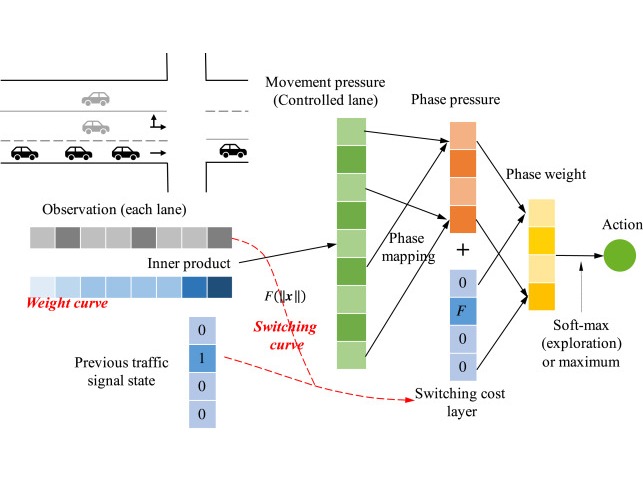
  • Reinforcement learning for signal control: theoretically grounded switching mechanisms and learning-based parameter optimization for distributed max-pressure control.
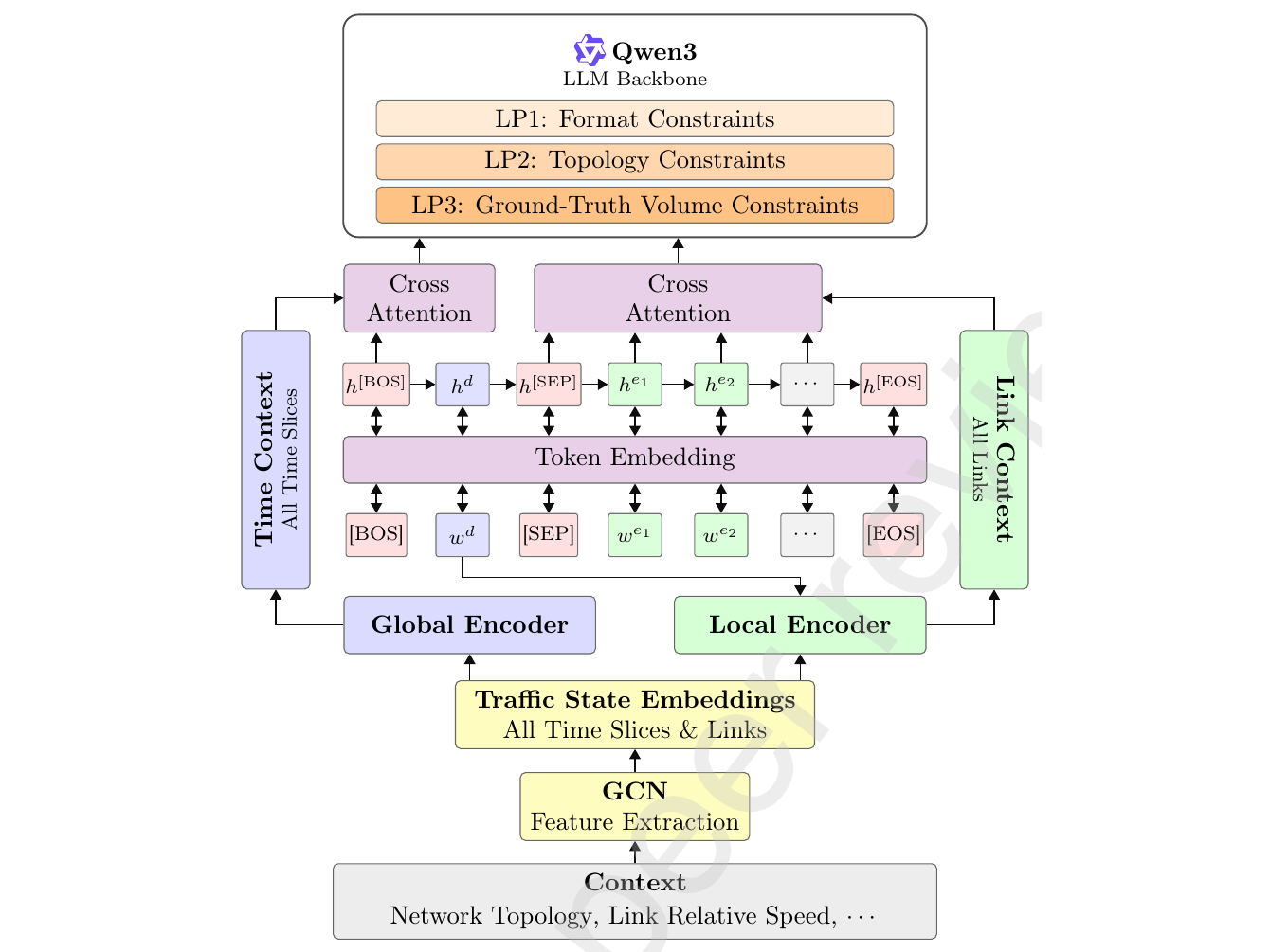
City-scale traffic demand language model
Constrained, context-aware language generation for city-scale demand
Reinforcement-learning-enhanced signal control
Reinforcement-learning-enhanced max-pressure control
02

Transportation data and simulation platforms

Complex transportation research requires both sustained observation of real systems and digital environments for testing concepts that are not yet broadly deployed.

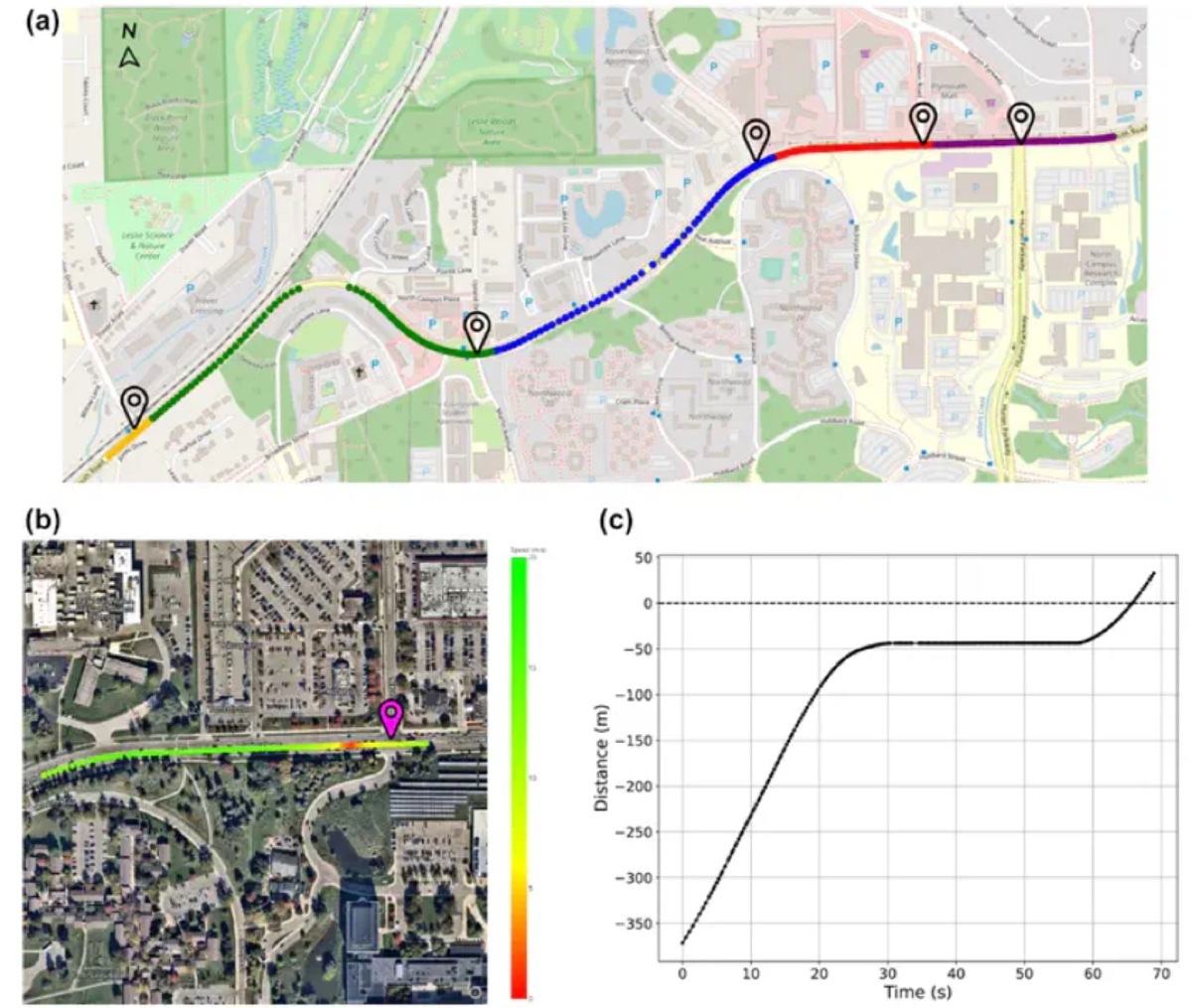
Connected Vehicle Data Platform. I developed data reception, preprocessing, map matching, signal-phase integration, performance measurement, and visualization for the Ann Arbor test environment, supporting real-time data from more than 2,500 vehicles and 74 roadside sites. The platform later expanded to large-scale GM trajectory data and supported research on signal control, driving behavior, and simulation calibration.

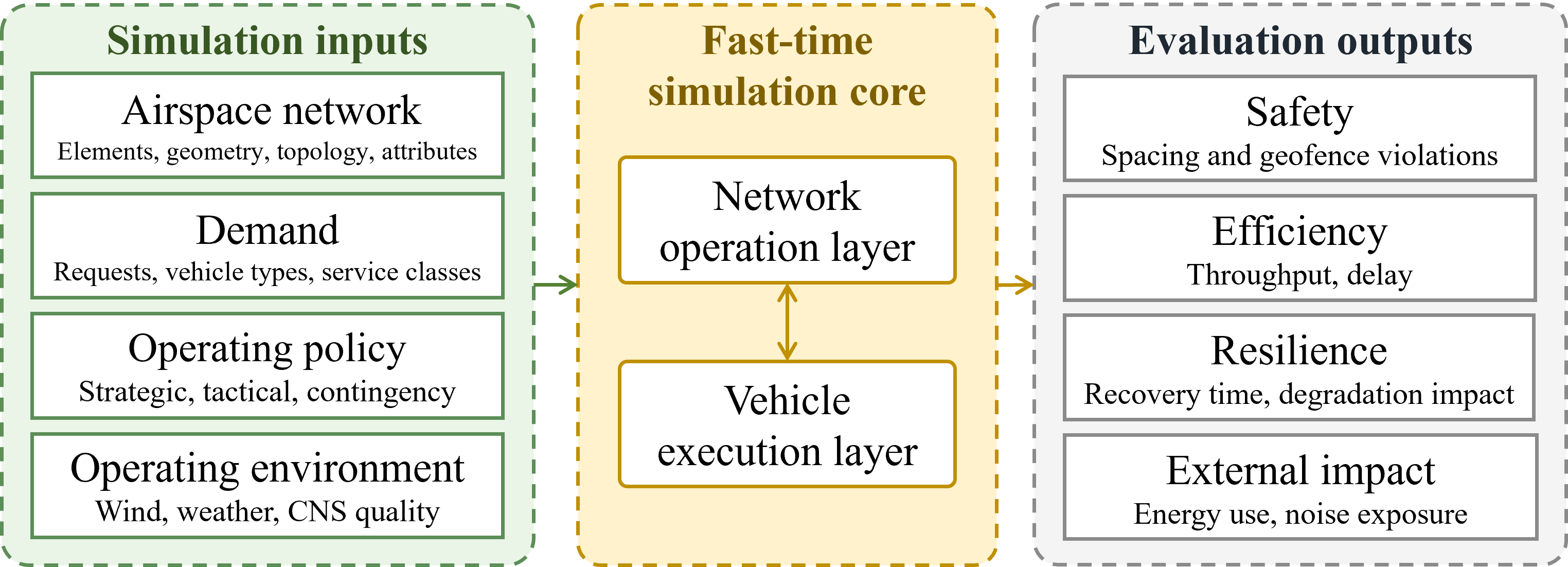
LOFT-Sim. An open-source fast-time simulator for structured low-altitude airspace, comparing trajectory reservations and demand-capacity balancing through a two-layer operations and vehicle-execution architecture.

Connected vehicle data platform
Connected-vehicle data processing, integration, and visualization
LOFT-Sim framework
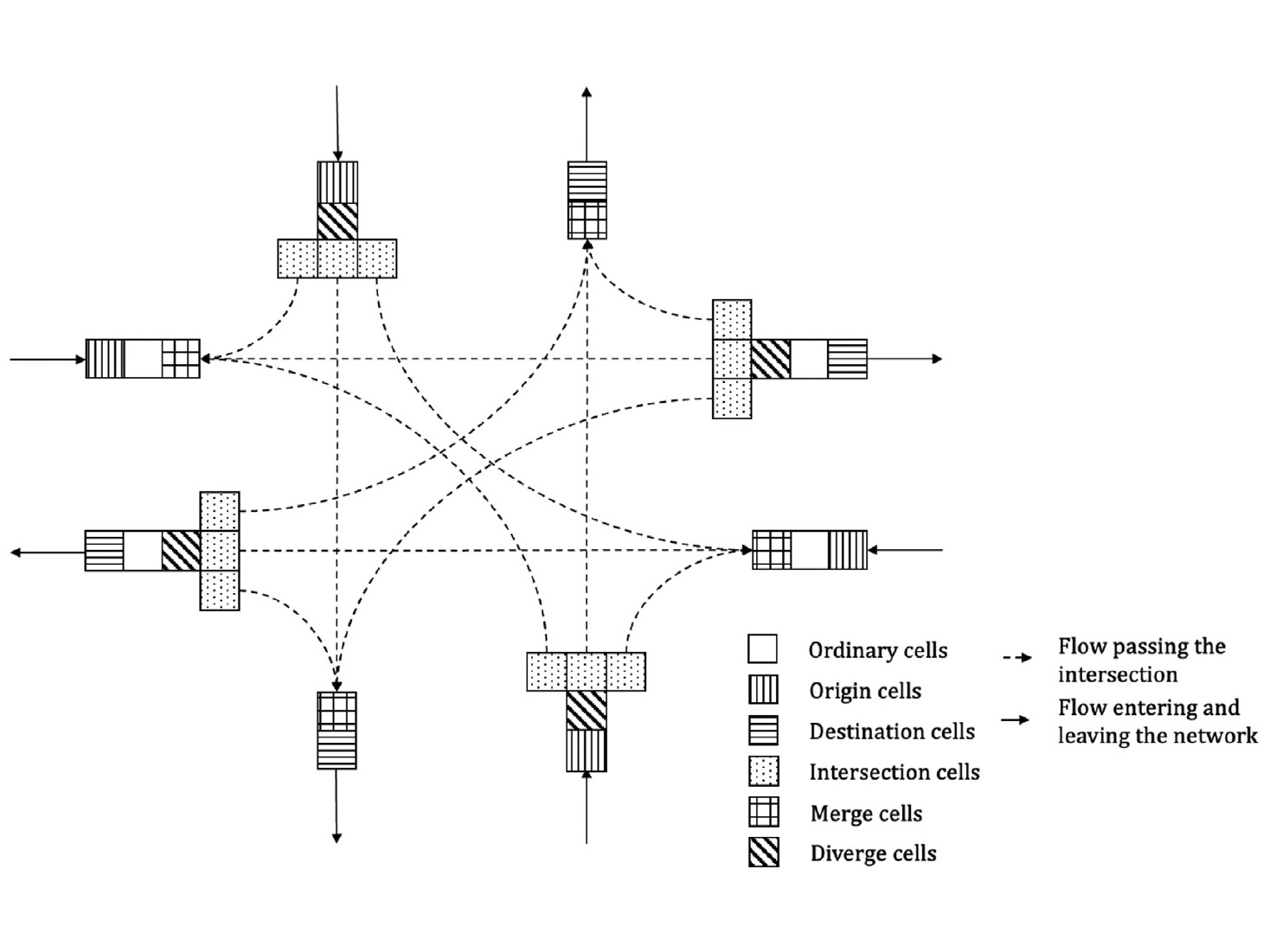
Fast-time simulation for aggregate-based low-altitude operations
03

A field-deployed traffic signal optimization system

OSaaS (Optimizing Signals as a Service) reconstructs traffic conditions and automatically retimes signals from sparse connected-vehicle trajectories, without adding roadside detectors.

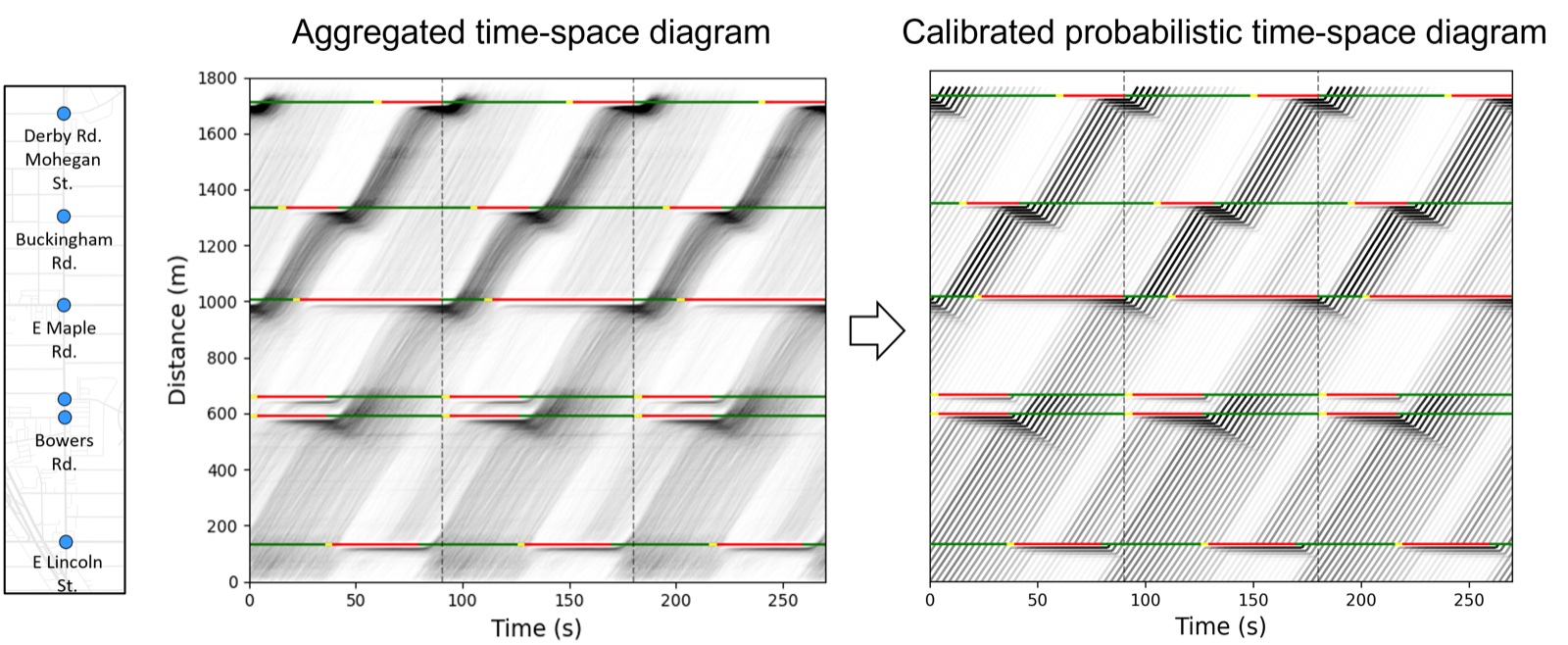
At its core is the Probabilistic Time-Space model, a parsimonious stochastic representation of stopped and moving traffic near signalized intersections. It infers network conditions even at low connected-vehicle penetration.

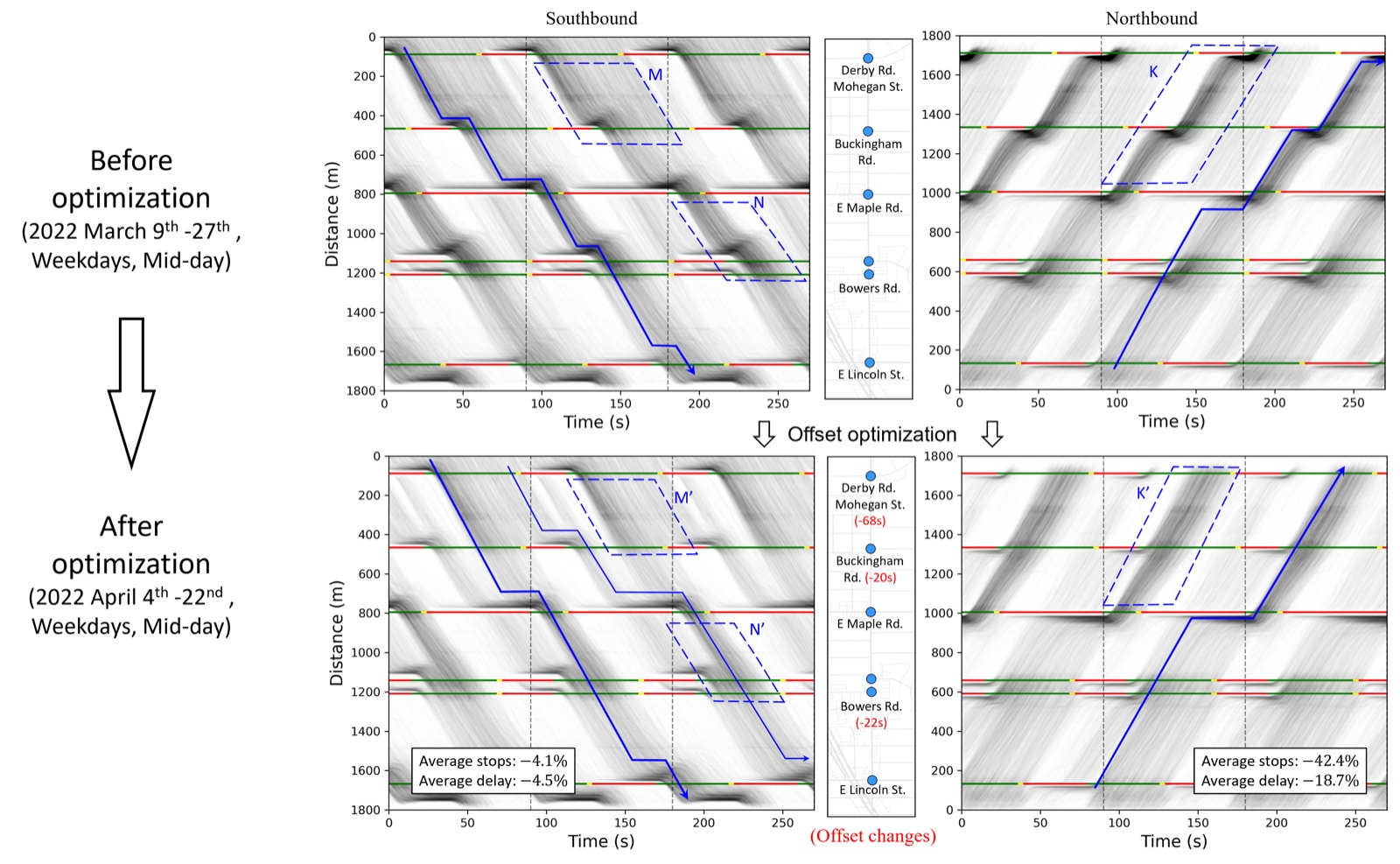
  • Early field tests at 34 intersections in Birmingham, Michigan reduced delay and stops by roughly 20–30%;
  • Supported by the USDOT SMART program, related technology has now been deployed at more than 1,400 intersections in Michigan;
  • Published in Nature Communications, patented in the United States, and licensed to General Motors.
Probabilistic time-space traffic model
Calibrating a probabilistic time-space model from sparse trajectories
Signal optimization field results
Before-and-after field results in Birmingham, Michigan
04

Traffic control for connected and automated systems

I study scalable and interpretable traffic-control mechanisms for complex urban networks and future automated environments. One line combines ADMM with Benders decomposition for stochastic network control; another extends max-pressure control with hysteresis switching and reinforcement-learning-based parameter optimization.

The emphasis is distributed decision-making from local observations while retaining provable stability or throughput properties, making large-scale implementation more plausible.

Distributed control for large traffic networks
Distributed traffic control for complex urban networks